 Haushelden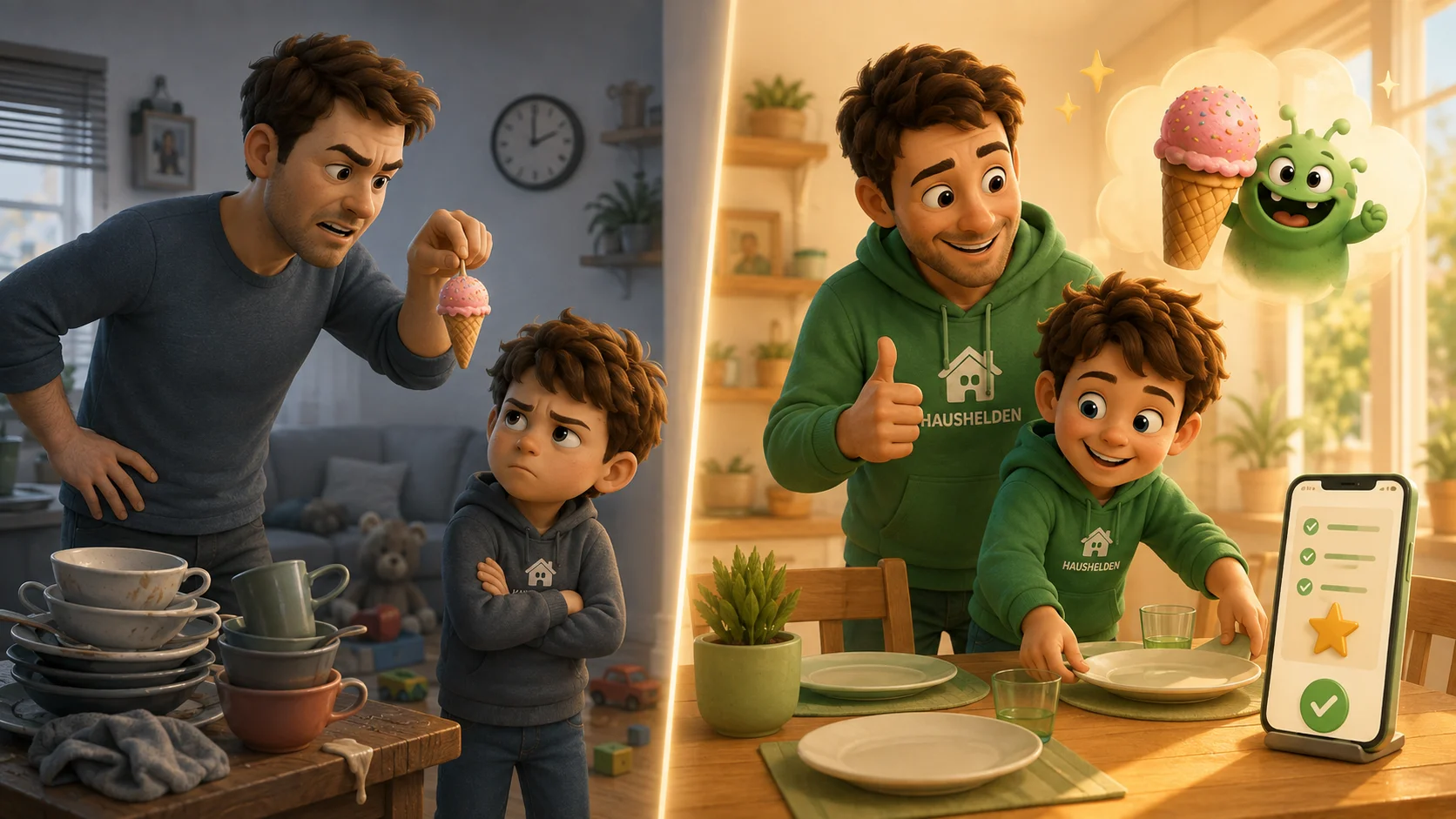
"Shouldn't kids just help out naturally?" I wondered when I first used the Haushelden app. The idea that rewards were a form of manipulation was deeply ingrained in me. But then I saw how redeeming a virtual ice cream brought a smile to my son's face and how he joyfully completed his tasks. Rewards aren't trickery; they're a bridge to self-reliance, helping children recognize the value of their contributions.
Why Force Doesn't Work
In many families, there's a belief that children should just help out around the house. After all, it's part of being a family, and there's even a law in Germany stating that children can help with household chores for ten hours a week. But reality often looks different. Kids wonder why they should help when everything seems to function without them. Forcing them to help can quickly lead to a loss of interest in helping out.
Force often makes children view their tasks as a burdensome duty. They feel their freedom is restricted and react with reluctance. This resistance can manifest as passive aggression or a general refusal to take on any assigned tasks. Instead of motivation, frustration grows, and the feeling of playing an important role in the family diminishes. This is not only problematic for family life but can also negatively affect children's development in the long run.
In the past, the cooperation of all family members was essential for survival. Working in the fields wasn't a choice but a necessity. Today, with the abundance we enjoy, children question why they should spend time on tasks that don't have immediate benefits for them. Fun and play take precedence, and that's perfectly fine. Children learn through play and discover their world through enjoyment.
Motivation, Not Manipulation
The idea that rewards are a form of manipulation is deeply rooted in many minds. One might think that rewards only teach children obedience. But that's where the mistake lies. Children aren't manipulated; they're motivated. The difference is crucial: motivation leads to self-reliance, while force leads to frustration.
An example from the Haushelden app illustrates this clearly: children can redeem a virtual ice cream for completed tasks, which can be exchanged for a real one. This small incentive ensures that children complete their tasks with joy. Helping out becomes a game instead of a chore. The psychological effect is that children experience how their actions have direct, positive consequences. This system of positive reinforcement fosters the development of responsibility.
The reward serves as an external motivator meant to spark internal motivation. When children see their efforts recognized and rewarded, their intrinsic motivation increases. They start taking on tasks not just for the reward but also out of their own initiative. This development is crucial for fostering independence and responsibility.
Self-Reliance Through Playful Incentives
The key point is that rewards serve as a bridge to self-reliance. Especially in the beginning, a reward can provide the necessary push to develop a positive habit. The Haushelden app allows parents to adjust rewards flexibly and cater to their children's individual needs. Whether it's a real ice cream or another small treat, it's about showing children that their contributions are valued.
By redeeming a reward, children experience a sense of autonomy. They can take something without having to ask first. It's a small step towards independence, showing them they can take responsibility. This experience of self-efficacy is an important life lesson and boosts children's self-confidence.
By recognizing the value of their contributions, children strengthen their social skills and their ability to act within a community. They learn that every small task they take on contributes to the well-being of the entire family. This understanding is the foundation for harmonious living and sustainable personal development.
The Long-Term Effect: Joy in Contribution
Over time, children realize that their contributions to the family are more than just tasks on a list. The Haushelden app makes progress visible and shows children that they are part of something bigger. Even if the contribution seems virtual at first, it develops into genuine joy in participating.
In the long run, this approach leads to children completing tasks not just because they have to but because they understand the meaning behind them. They realize they can contribute to the family and that their contributions are valuable. This realization is the true reward that comes with using incentives.
Parents who follow this approach often report positive changes in family life. Children are more motivated, take on responsibility, and feel like an equal part of the family unit. This positive dynamic extends beyond the home environment to other areas of children's lives, such as school and leisure activities.
From Obedience to Independence
The shift from obedience to self-reliance is an important step in parenting. Rewards play a crucial role as a bridge in this process. At first, it may seem like a simple trick, but it's more than that. It's a method to show children that being part of a community is fun and that their contributions matter.
The Haushelden app provides the ideal framework to facilitate this transition. Parents can support their children by motivating them while simultaneously fostering their independence. Thus, a small reward becomes a big life lesson.
So if you're thinking about how to introduce your children to the joy of helping, try a playful approach. Rewards aren't a means of manipulation; they're a tool to convey the value of self-reliance. Start by celebrating small successes and watch as your child joyfully contributes. This experience will not only ease daily life but also strengthen family bonds.